Menopause education can help organizations replace uncertainty and assumptions with better understanding. Michelle connects the clinical realities of the menopause transition with practical questions about daily functioning, workplace conversations, and access to support.
For employee audiences, the value is understanding symptoms and knowing where to seek reliable information and care. For managers and leaders, it is recognizing work-related barriers and responding appropriately without making assumptions about someone’s health or ability.
What Your Audience Can Take Away
Understand the Experience
Menopause is a natural life transition, but its effects vary. Some people have few troublesome symptoms; others experience hot flashes, disrupted sleep, mood changes, or difficulty concentrating. A session can explain how these concerns may affect daily life, address common misconceptions, and clarify why a symptom deserves thoughtful assessment rather than an automatic hormonal explanation.
Practical value: Participants gain a clearer understanding of the transition and how to find credible information and appropriate care.
Respond With Confidence and Respect
Workplace understanding starts with listening. A manager can acknowledge a reported difficulty, ask about the work-related concern, and follow the organization’s support process without suggesting a diagnosis. Employees should be able to access general education without being asked to share personal experiences in a group.
Practical value: Participants practice a constructive response while respecting individual choice and privacy.
Make Support Easier to Access
Explore what support looks like in the actual work setting: temperature and ventilation, opportunities for breaks, scheduling concerns, and access to existing health or employee resources. The Menopause Society’s workplace recommendations emphasize that needs differ with the individual, the environment, and the type of work.
Practical value: Employees know where to start, and managers know whom to involve next. Specific requests follow the organization’s established process.
Put the Learning Into a Workplace Scenario
Illustrative discussion: An employee says, “I’m struggling to get through the afternoon shift.” The manager does not know the cause.
A possible opening is: “You mentioned the afternoon shifts have been difficult. Is there something about the schedule or work environment you would like us to look at?”
A workshop can use this scenario to examine three decisions:
- Understand: What difficulty has the employee actually described, and what assumptions should the manager avoid?
- Discuss: Which aspects of the work setting could be explored without requesting a personal medical history?
- Connect: Who is the appropriate contact for support, and how will the next step be communicated?
The discussion keeps attention on the concern raised and the route to support, rather than turning a workplace conversation into a clinical assessment.
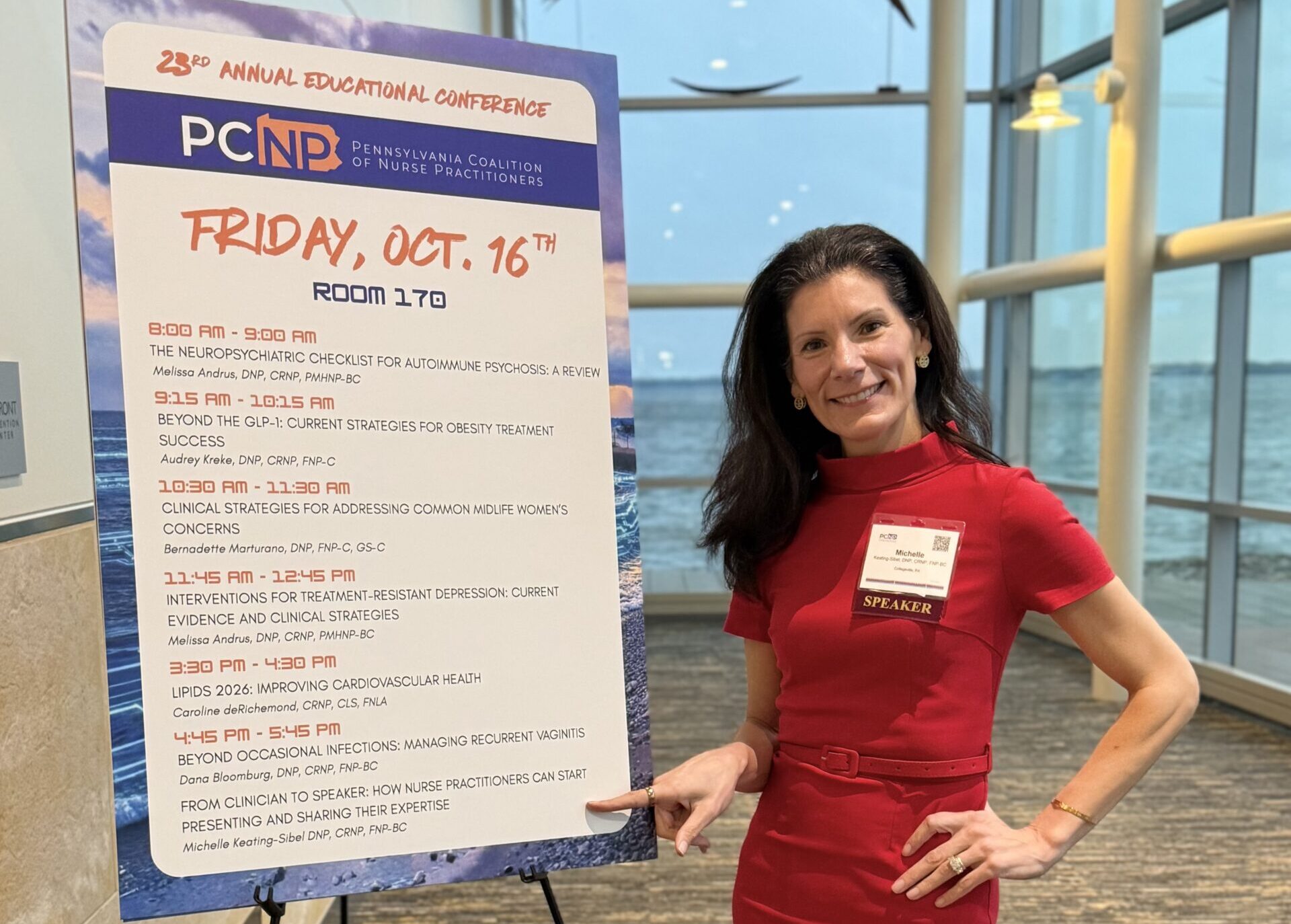
Led by Michelle Keating-Sibel, DNP, CRNP, FNP-BC, MSCP, a practicing family nurse practitioner and Menopause Society Certified Practitioner.
Bring Menopause Education to Your Workplace
Planning employee education or a leadership workshop? Share your audience and the questions you want the session to address. Michelle can discuss a clinically informed presentation suited to your organization.
Looking for clinician education? Explore menopause education for primary care teams →
Further reading: The Menopause Society — Menopause Symptoms and Menopause and the Workplace: 2024 Consensus Recommendations.